What happened in 2025
More drawing, freelance work, homesteading losses, and learning to share what I make.
This year I printed a 2025 photo book for the family and a 373 page book for all my instagram photos, Analog-insta. (For that I used the service Lulu.) I also did a ton of drawings this year, so I had plenty of references to remind me what happened this year.
Practice
I leaned heavily into drawing. That wasn’t part of the plan, but here we are.
It started in early January, standing at a cold playground while the kids played. I sketched what I saw and it came out well enough to surprise me. This drawing book was partly responsible, one that preached not every line has to be perfect. That gave me permission to cut the perfectionism crap.
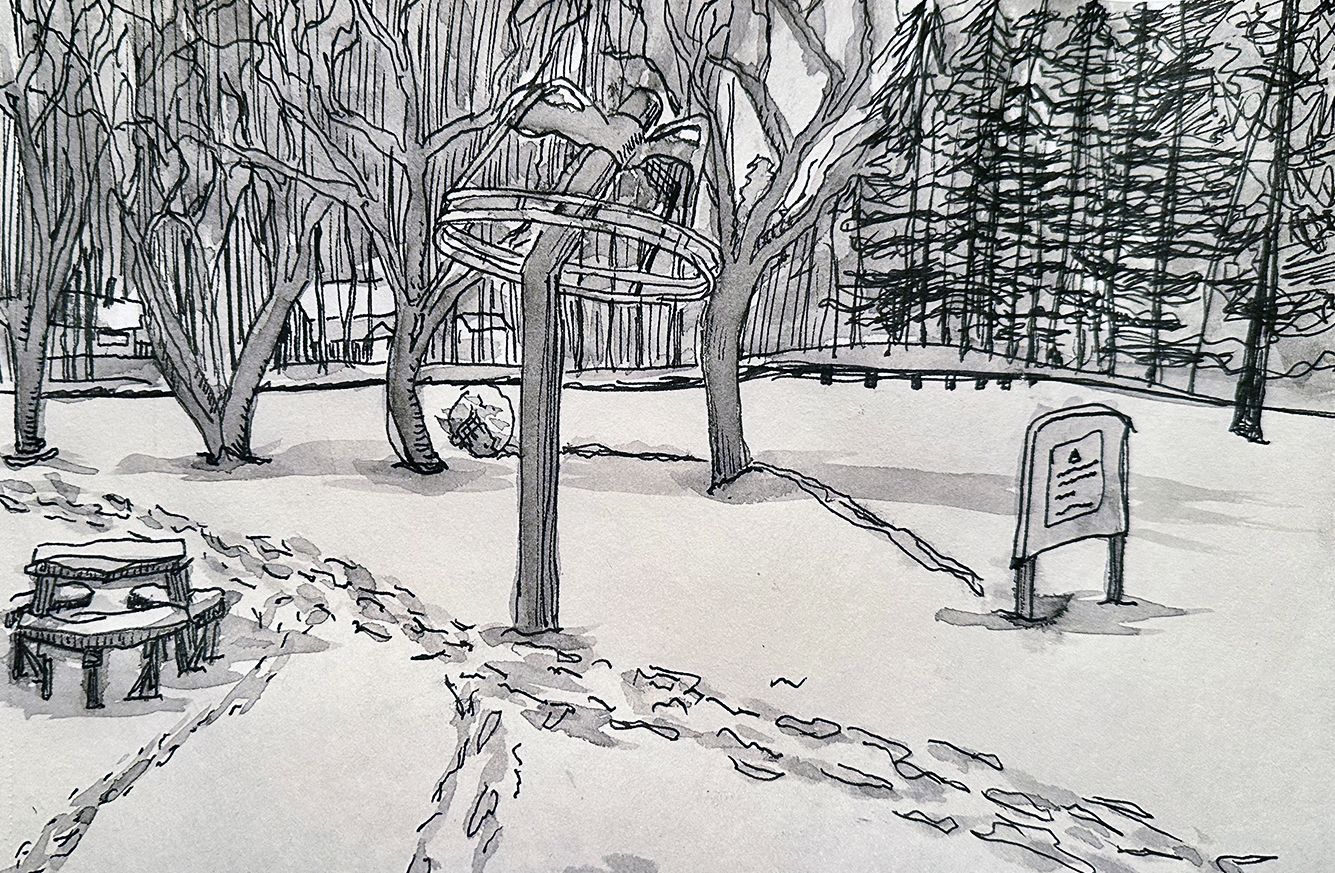
The real clarification came in April. A month-long fundraiser where I committed to making something 3 x a week, then sharing it with supporters. I expected it to feel obligatory, but people wanted more and I realized the importance of an art feedback loop.
Flipping through my sketchbooks and pads, I count 114 drawings across the year. The previous 20 years, I’ve probably only logged an average of 5.
Here’s one thing: I don’t experience creating art as “fun.” That word gets thrown at me a lot. “What a fun hobby.” But it’s often a pain in the ass. The urge doesn’t feel like joy oddly, but like something that needs doing, and I’m the one who has to do it. The work is urgent in a way that doesn’t care whether I’m in the mood. I’m sure many artists, poets, and writers can articulate the urge better than I.
Artists don’t get down to work until the pain of working is exceeded by the pain of not working Stephen De Staebler, sculptor, from Art & fear
Looking at what I’m actually drawn to has started clarifying where I want to grow. What my art lacks currently is a point, a reason, a narrative. The stuff they teach you in art school. Here’s to practicing that next year.
This is the second year I’ve (mostly) stopped drinking. I probably had 6 drinks over the year. Maybe sobriety made space for the drawing to become urgent? Could be. Drinks numbers are down, drawings up.
Labor
Work was harder this year. There’s a particular frustration that comes when something you care about gets disrupted by forces that don’t seem to care much about the actual work. An AI mandate came down without the project management infrastructure to support it. It felt chaotic. Priorities shifted. Clarity evaporated. But our team dug in and persevered which made it feel like we were all in it together and that brought us closer. It was the most frustrated I’ve been at the company.
On the flip, the most rewarding times at work were doing research. I went for the third year in a row to Red Hat’s conference as a researcher. As a remote worker, that face to face time with people who use what we build is so powerful. For all the reasons user research is powerful: you hear what works and what doesn’t directly. No synthetic voices, no spinning your wheels in your remote-work bubble. In addition, I ran two card sort studies and continue to maintain an ongoing feedback mechanism on the site.
Also, side-work ramped up.
I’ve become the local tech guy. I built a website for Jericho Underhill Food Hub, by helping them set up their donation infrastructure and choosing the right tools. I created a logo for West Farm, a place in Jeffersonville where we’re getting a winter CSA. Small projects are all I can fit in these days. Freelance work like this has been a nice break from enterprise-sized projects.
Land
I felt grief this summer on the farm. We’d raised 6 barred-rocks from chicks, and at 10 weeks old they were murdered. They were transitioning to the adult coop when an unknown beast from the riverbank took them. All that care from little bundles to nearly grown, and then gone. Ugh, that stung.
But the year was generous in other ways.
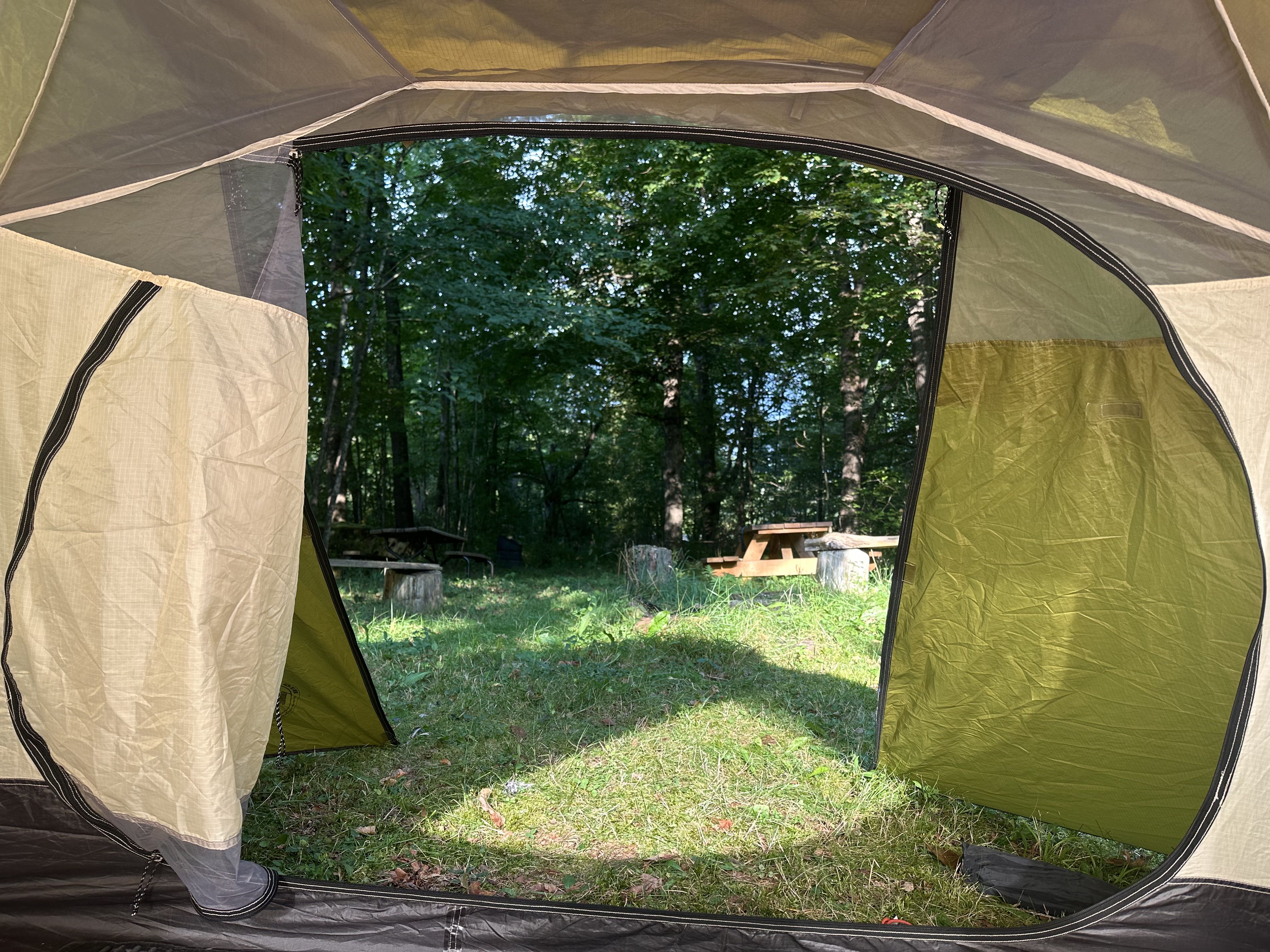
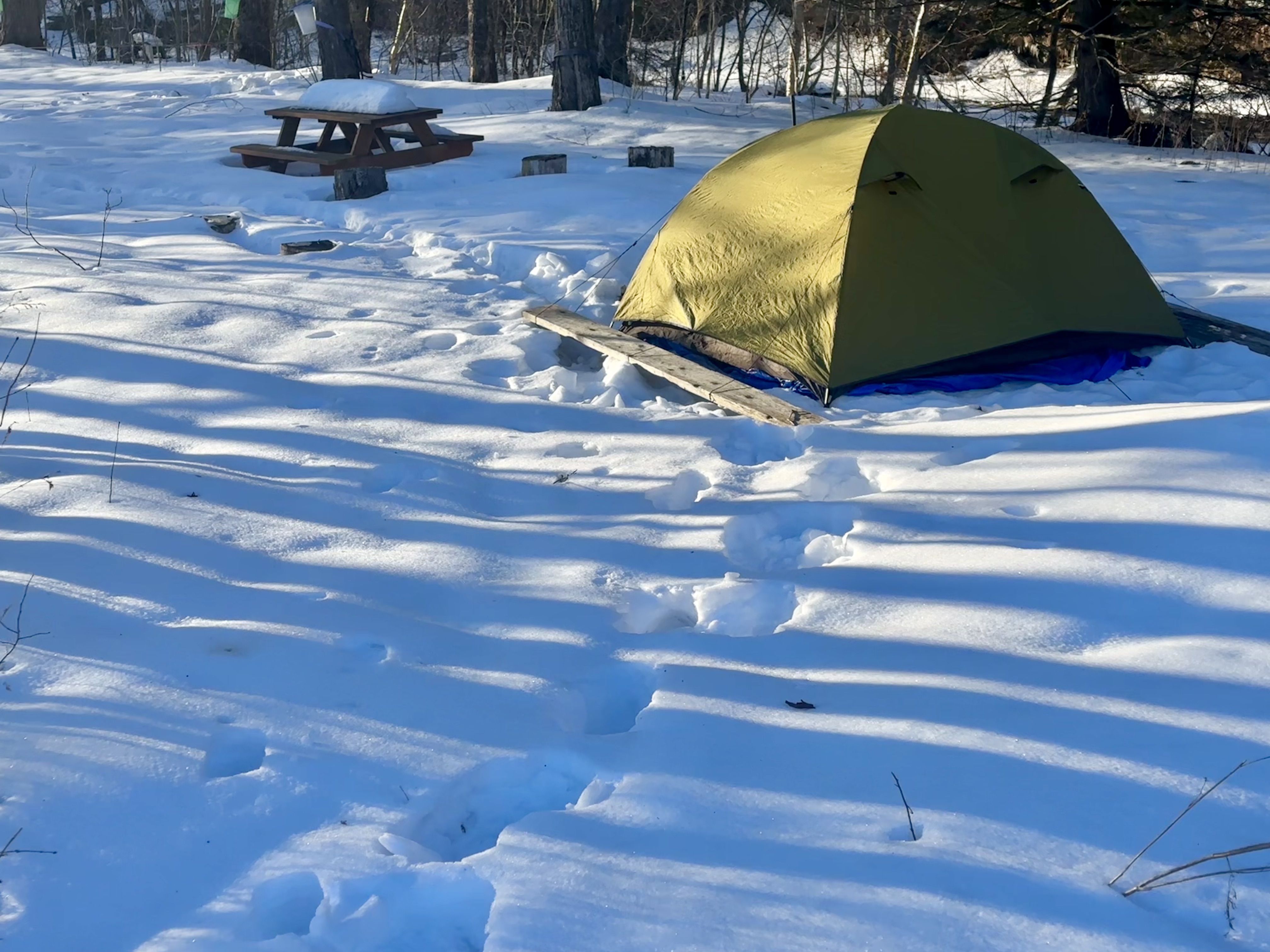
We camped at two new VT state parks: Half Moon Pond and Branbury. Locally, we did three backyard overnight camping sessions: two in winter, one in summer. In early September, we camped in the Adirondacks for Otis to witness three days of world and jazz music, more dancey than jam-bandy. We survived our first music festival.
The garden was uneven. Potatoes and garlic did well. The perennial walking onions patch is thriving, which is a win I’ll take. Snap peas climbed the fence nicely. Tomatoes, grown up strings now for the second year, came in cleaner but didn’t produce like I’d hoped. Carrots failed again. Beets were spotty. I haven’t figured out fertilizer yet; I’ve been relying on leaves and compost, but I think the heavy feeders need more. Next year I’ll try differently.
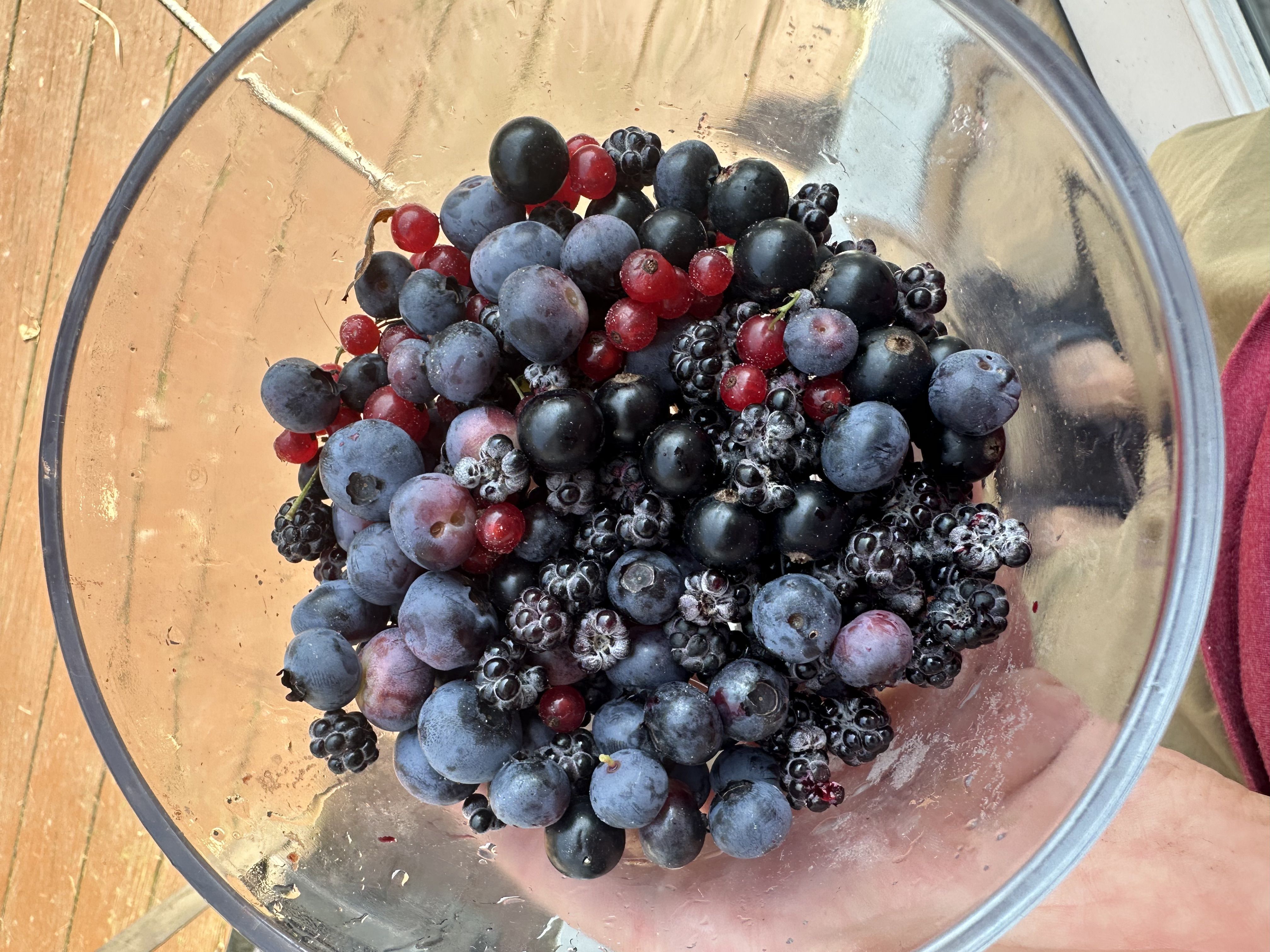
Blueberries, though, had an amazing year. The freezer is stocked. We made jam for Christmas gifts. Maple syrup was OK. I tapped five trees and got a gallon, which turns out to be less than we use in a year, so I’m tapping more next year.
We got a puppy! We got three new chickens in the fall, older this time. Spent a whole bunch of time outside with the fam.
Makings
I learned how to tile a floor. We had old linoleum upstairs. I pulled it and replaced it with checkered black-and-white tile. It came out okay to me, great to an onlooker. Like most projects, the next one will be better. Each new project I add to my belt, I gain respect for the carpenters and trades-peeps who know what they’re doing.
I also built a wall of shelving in the basement from a score off Craigslist of someone’s old cedar fence. Nice wood. On this one, I learned, quickly, that you shouldn’t try to rip full pieces of plywood through a contractor table saw. That was gnarly and a fitting debut to my new saw.
Mind
I’m halfway through Pynchon’s Gravity’s Rainbow. It’s the kind of book that demands you show up, and I’m only still in it because of the secondary, podcast support from Slow Learners. There’s a lot of support you can choose from for a book with fandom like GR. These fellas struck a chord with me. They also maintain this mega-guide: Proverbs for paranoids. This quote sums up the tome for the unititiated:
It remains a difficult novel to critique (or even to read), not only because of the myriad subjects it covers, but also due to the lack of an obvious storyline. Critics often focus on Gravity’s Rainbow as a “text”, or on its meta-textual effects. Its “plot” is difficult to summarize. It is clearly not a traditional novel. However, despite its unusual structure and density of language, clearly one of the main themes that emerges in Gravity’s Rainbow is the prevalence of corporate power and its attendant technologies. Corporate power crosses national lines, even (especially?) during times of war, even during World War II. Dan Gegges, The Satirist
I’ve become interested in tackling a hard book every once in a while, the kind that won’t let you coast. I don’t know why I punish myself so. Before this, I finished the postmodern Yale online course syllabus, which I started last year. It led me down a few tangents not on the list. I read In Cold Blood, then naturally went to the Capote film about the author, then the 1967 adaptation of the book, then Badlands with Martin Sheen. These stories tried to understand the fear of the late 1950s, due to brutal murders by individuals that weren’t easily painted as bad. A strange thing to sit with now, when murder has become normalized. Our fear generalized.
I read Cory Doctorow’s Picks and Shovels. One of his lists led me to Borne, apocalyptic science fiction that I really liked. I want to check out more Jeff VanderMeer. Then I dug into Daniel Clowes’s Eight Ball comics. His series Like A Velvet Glove Cast in Iron fits in nicely with Pynchon. David Carr’s The Night of the Gun was an excellent illustration of what substance addiction must feel like. His prose was so tight and efficient. I followed that with his daughter’s memoir about him, watching addiction reshape itself across generations. Twas a good year for piggybacking novels.
Then I went east and picked up meditation again, pairing it with a Zen-buddhism memoir from a British journalist: One blade of grass.
–
In their brief time together Slothrop forms the impression that this octopus is not in good mental health, though where’s his basis for comparing?” Thomas Pynchon, Gravity’s Rainbow
Onward.